

Growth Gaps, Part 3

Your next great sales opportunity might already be a customer.
Think about it. These people already know your company. They've experienced your work. They've developed some level of trust in your team.
That makes them some of the easiest prospects to sell additional services to.
Yet I've seen landscaping, lawn care, and tree service companies invest heavily in generating new leads while overlooking opportunities sitting in their existing customer base.
It's not necessarily because they don't recognize the potential. Most owners and sales managers know they should be doing more.
The challenge is finding the time, developing a process, and consistently following through.
In Part 1 of our Growth Gaps series, we explored Why Good Leads Don't Become Sales. Part 2 focused on Why You Can't Outsell a Customer Retention Problem.
For this final article, let's look at how you can grow revenue from your existing customer base.
Image Source: Kingstowne Lawn & Landscape
1. Your Customer List Is More Than a Mailing List
Most established green industry companies have accumulated hundreds or thousands of customer contacts.
That's an incredibly valuable asset. Yet much of the communication those customers receive consists of seasonal promotions, generic newsletters, and occasional service reminders.
I've seen plenty of emails that spend more time talking about the company than sharing something the recipient might actually find interesting.
Why would someone look forward to opening those? (Yuck).

Your existing customers don't need another generic sales pitch. They need reasons to stay connected with your company.
That might mean:
- Sharing a short video explaining a common seasonal problem
- Sending helpful advice based on services they already receive
- Featuring an interesting customer project or transformation
- Introducing a team member and sharing something personal or entertaining
- Sending a timely text about a concern affecting properties in their area
The goal isn't to sell something every time you communicate. It's to deepen the relationship.
Personalization matters, too.
A lawn care customer shouldn't necessarily receive the same messages as someone who hired you for a patio installation. A commercial property manager has different concerns than a residential homeowner.

Segmenting your customers by services, property type, interests, and past purchases makes your communication more relevant.
Email, SMS, and social media can all contribute. The key is creating content people actually want to receive, preferably from recognizable team members rather than an anonymous corporate voice.
2. Don't Assume Customers Know Everything You Offer
I've lost count of how many times I've heard an owner complain that an existing customer hired another company for a service they could have provided.
It's frustrating, especially when you've spent years building that relationship.
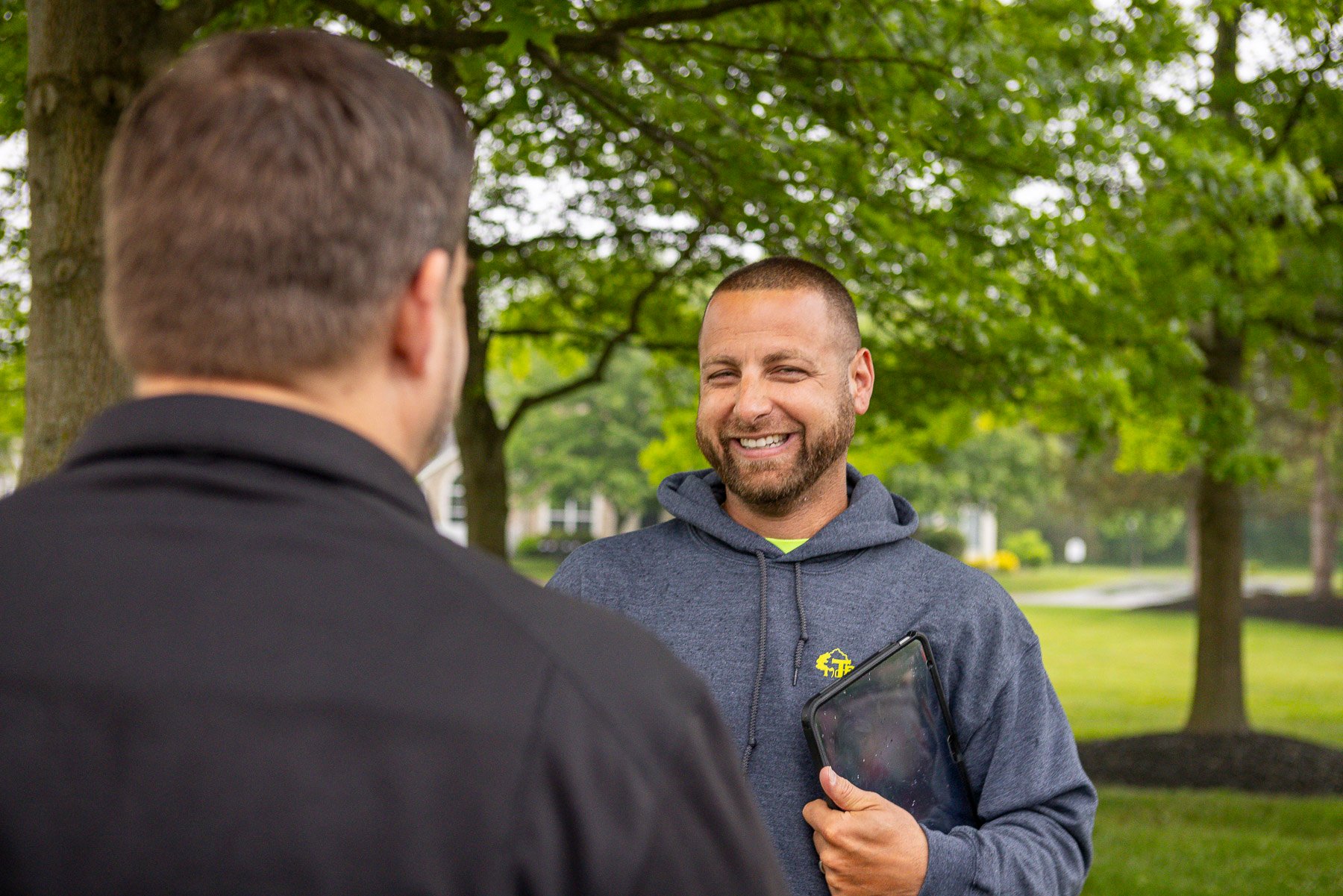
Image Source: Trimline Landscape Management
Consider the customer's perspective.
They have jobs, families, and a hundred other things competing for their attention. Remembering every service your company offers isn't particularly high on their priority list.
You might have mentioned landscape lighting in a newsletter six months ago. That doesn't mean they'll remember you install it when they decide to illuminate their patio.
Awareness requires more than telling someone once...or twice...or ten times.
This is where consistent, educational marketing can make a difference.
-
Show maintenance customers examples of landscape transformations
-
Share before-and-after photos of lighting installations
-
Explain how plant health care treatments can protect valuable trees and shrubs
Customer stories are particularly effective because they help people imagine what might be possible on their own properties.
You're not constantly asking customers to buy something. You're helping them recognize opportunities they might not have considered.
3. Turn Observations Into Actual Sales Conversations
Your crews and technicians spend more time on customer properties than almost anyone else in your company.
They're surrounded by opportunities to identify needs.
The challenge is turning observations into meaningful conversations.
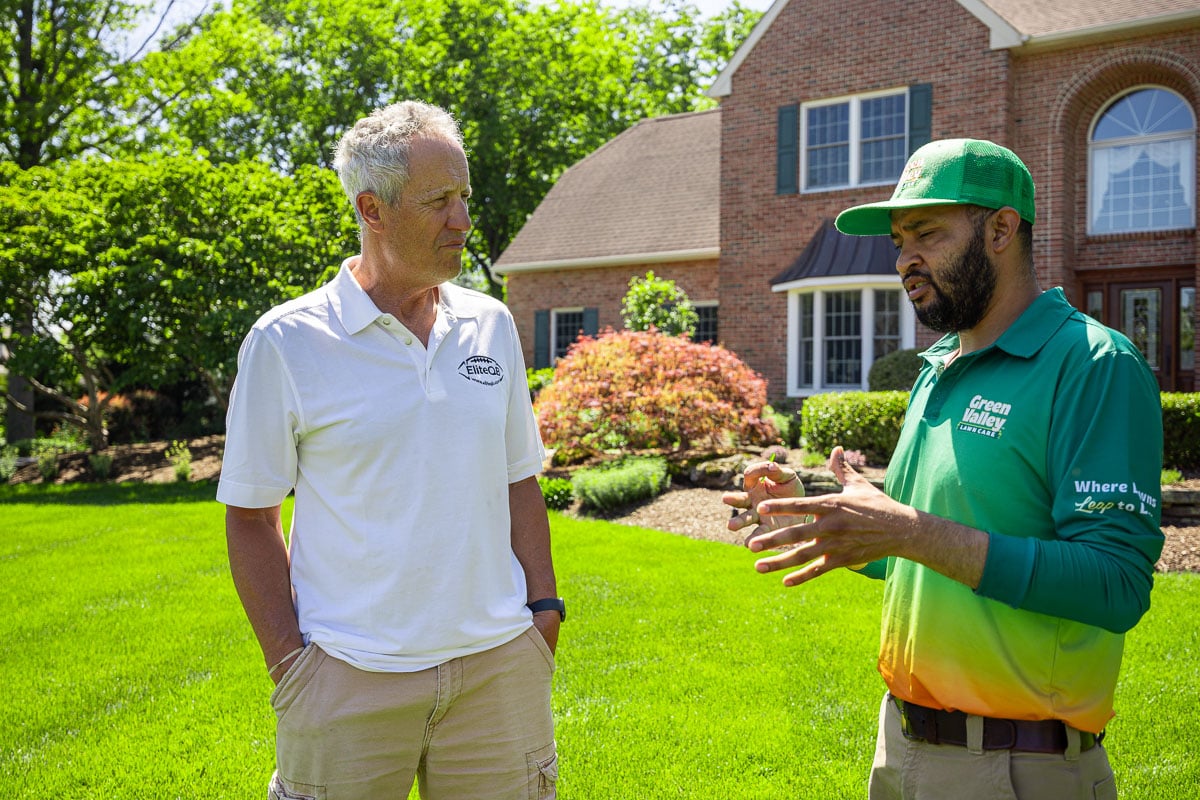
Image Source: Green Valley Lawn Care
Lawn Care
A technician notices a lawn plagued with a weed/insect/disease issue that isn't covered by their level of progam.
In some companies' software, that observation becomes a condition code on an invoice or triggers an automated email.
That's better than doing nothing. Yet the opportunity often dies there.
What if the technician knocked on the door and explained what they noticed?
Depending on your business model, they might be trained and incentivized to sell the service themselves.
When I was a technician (many moons ago), I made about $200+ a month just upselling clients. Granted, some ops people just want to be "opping". But you'd be surprised at how technicians can generate a lot of new business if they have the right carrot dangling in front of them!
Alternatively, your technician could initiate a lead that prompts a salesperson to contact the customer quickly with pricing, handle objections, etc. if you'd rather keep the technicians focused on productivity.
The important part is making that next recommendation step easy for your technicians.
We used to have a dedicated voicemail where field personnel could call in the client info, need, etc. and go on with their day. Then a sales team member would take it from there.
RELATED READING: Feed Your Sales Pipeline With an Internal Lead Program
Landscape Maintenance
When I was an account manager, crew leaders would sometimes call me after discussing additional work with a customer.
If I was nearby, I'd stop at the property, price the work, and occasionally get approval while the crew was still there.
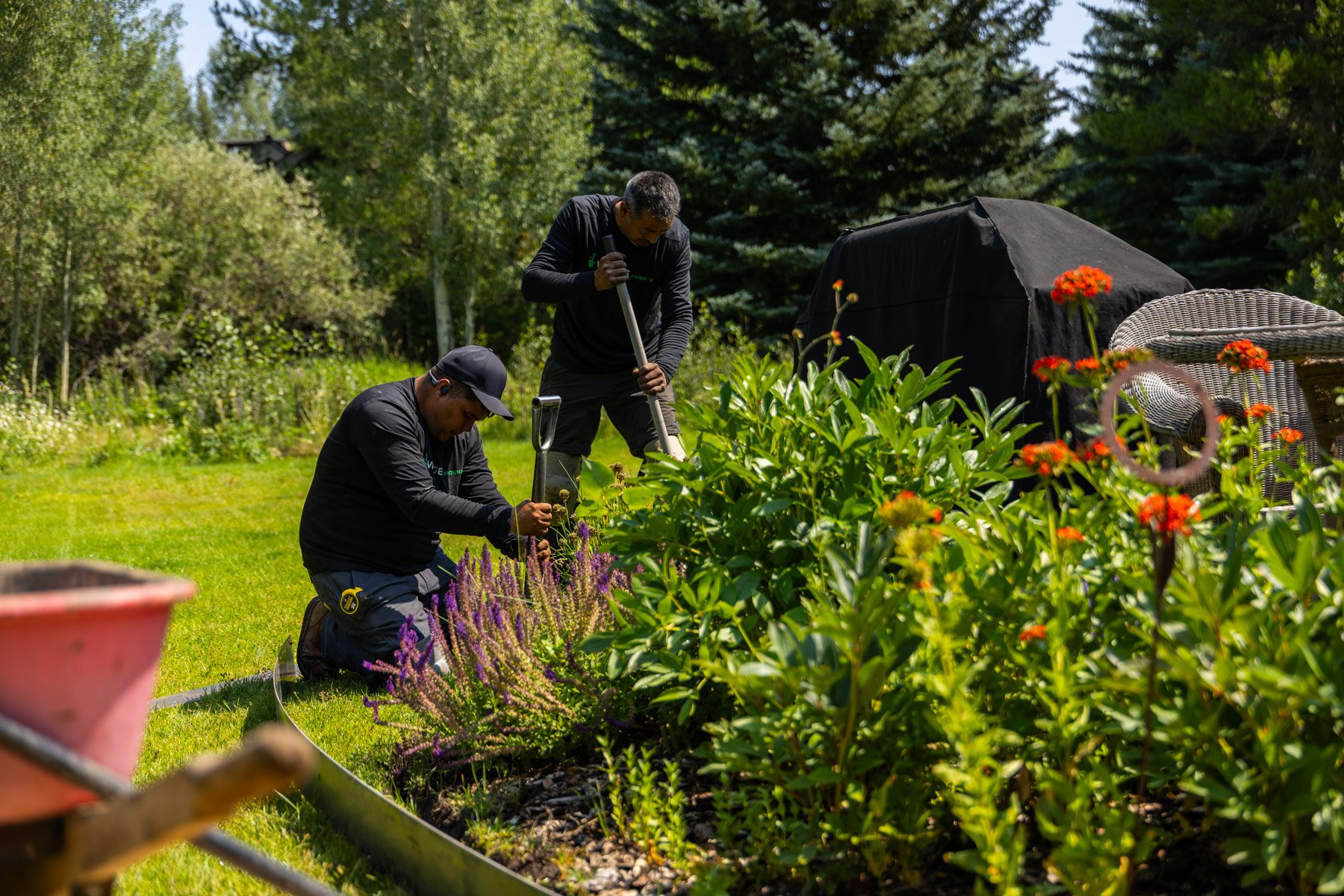
Image Source: Village Gardener
Other times, I'd ask the crew leader how long the work would take and call the customer with a price.
Compare that with a note that reaches the office days later, after the crew has left and the customer's interest has faded.
Your crews don't necessarily need to become salespeople. They need to recognize opportunities, engage customers appropriately, and know how to hand them off.
And...speed matters.
General Tree Care & Plant Health Care
Does this sound familiar? You walk onto customers' property and notice a dead or declining tree that nobody on your team had mentioned.
Literally...the production staff saw that dead/declining tree every week for months...sigh...
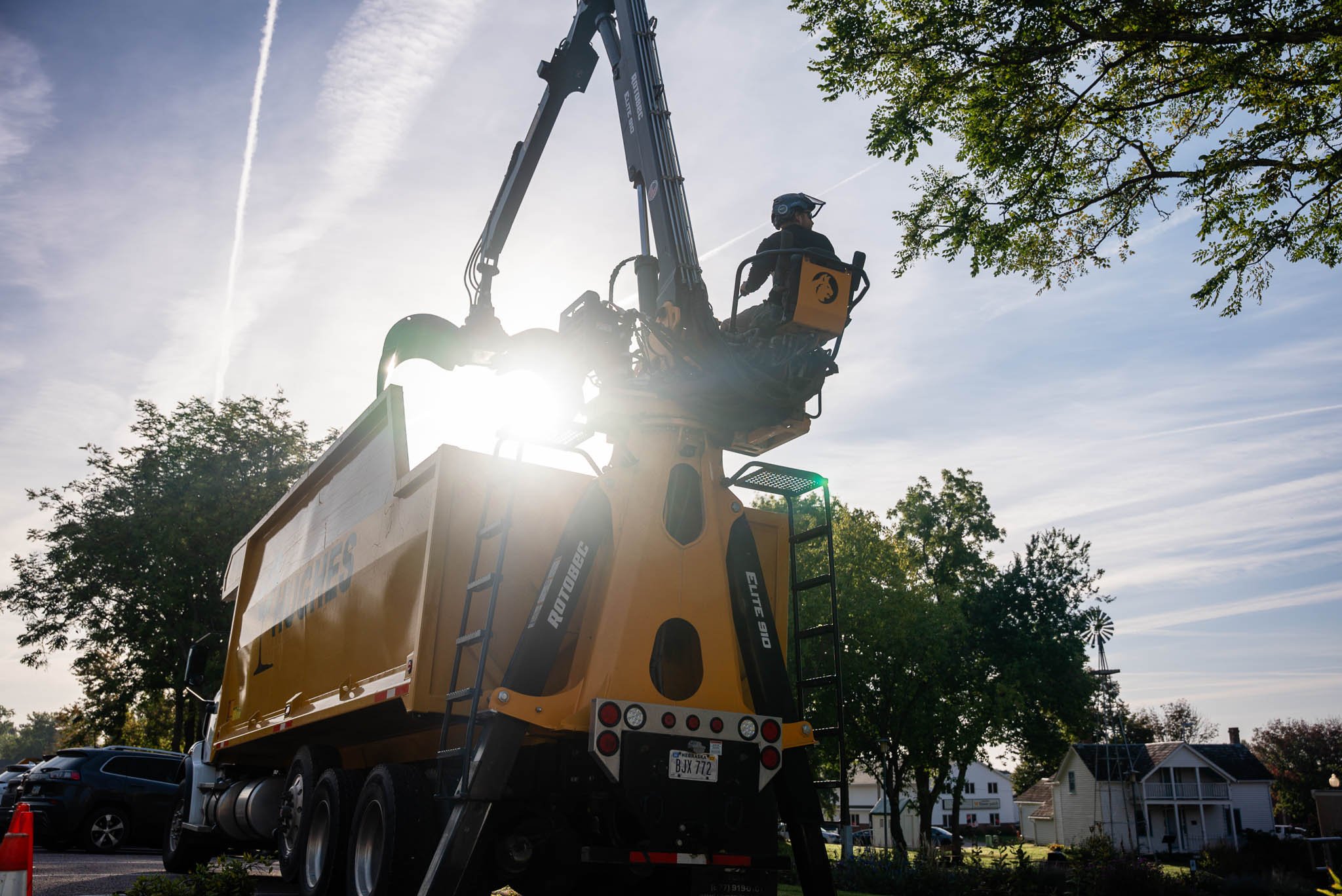
Image Source: Hughes Tree Service
Or you drive by and see your competitor is already there removing the tree...OUCH.
For companies offering multiple services, that represents a missed opportunity to help a customer.
Pruning and plant health care regularly offer these possibilities.
A pruning crew might notice some newly-hatched bagworms on a nearby arborvitae hedge (not on their work order).
A lawn technician might recognize a shrub that's struggling with lacebugs. Neither necessarily needs to diagnose or sell the solution, but both can alert someone qualified to investigate.
Companies can also be more intentional about future care.
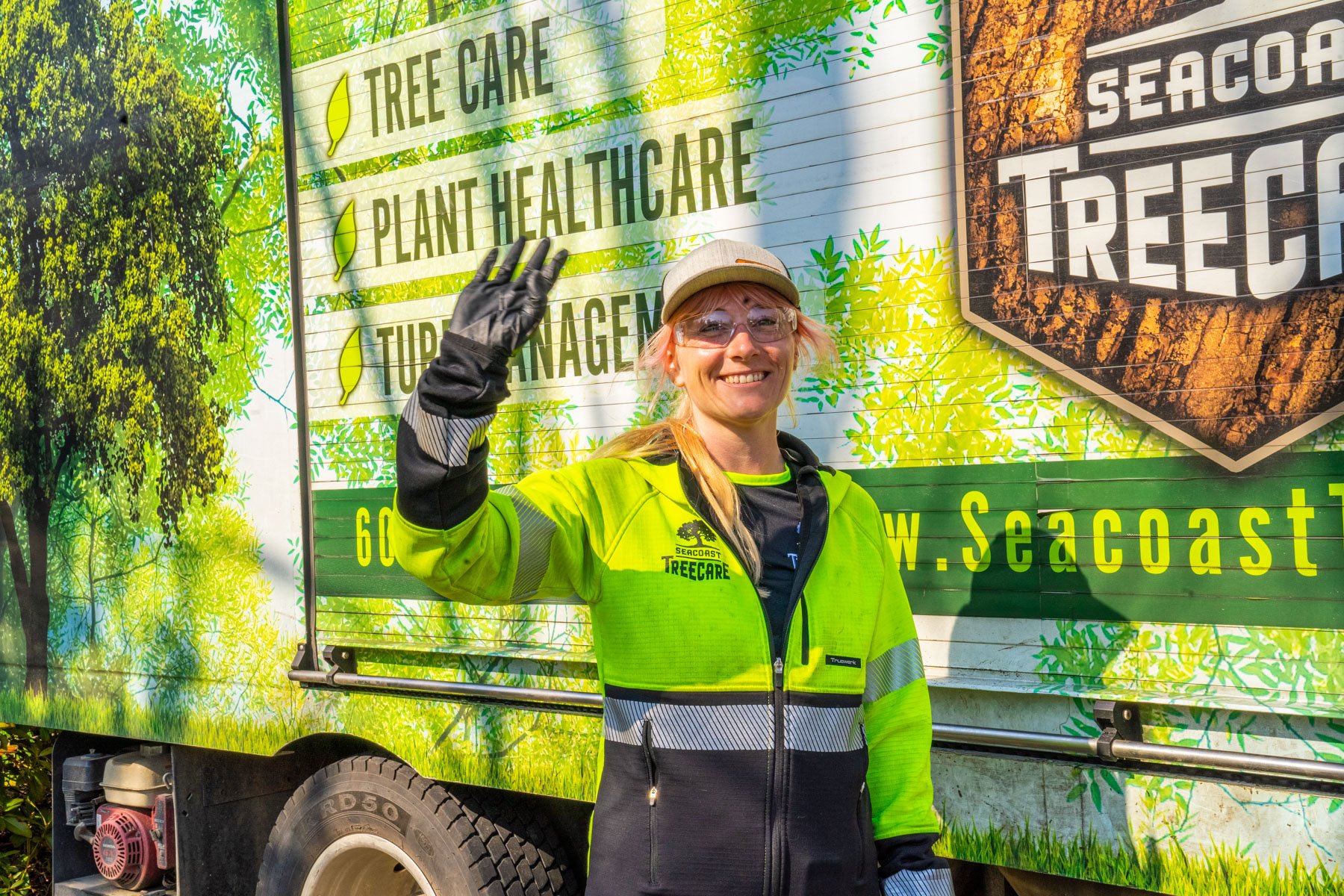
Image Source: Seacoast Tree Care
If a customer hires you to prune certain trees or shrubs, why not record when those plants should be evaluated again and have a mechanisim to raise the issue years later?
The recommendation should reflect the species, growing conditions, and actual needs rather than an arbitrary sales schedule.
Here's one approach I used to get more PHC leads. I identified 100 existing customers with strong plant health care potential. During slower periods, I'd walk their properties, collect samples showing insect or disease problems, and leave personalized recommendations. (Oh, and I'd also spot trees that needed pruning.)
I called it my "bug-in-a-bag" approach.
It generated tens of thousands of dollars in additional monthly sales.
Today, I'd also use short, personalized videos to show customers exactly what I was seeing on their properties.
The technology makes that kind of communication easier than ever and seeing is believing (vs. combing through a nastly little bag of horrors).
4. Don't Let Future Projects Disappear
Design-build companies have their own version of this problem.
A homeowner completes the first phase of a landscape project but postpones the outdoor kitchen, lighting, or additional planting until a future year.

Image Source: Outback Landscape
The designer knows about those plans. They might even be documented in the original proposal.
Then everyone moves on to the next project.
Two years later, nobody has followed up.
What if someone simply called to ask how the customer was enjoying their patio and whether they'd given any more thought to the next phase (clearly documented in your CRM)?
That's a natural conversation, especially when you already know what they wanted to accomplish.
Image Source: Level Green Landscaping
The same applies to maintenance services.
Some design-build companies mention ongoing maintenance when a project is sold. Others provide a proposal or offer an incentive to sign up.
When the customer declines, the opportunity often ends.
Why not revisit unclosed maintenance quotes a few months after installation?
On the other side, maintenance-heavy companies should regularly expose existing customers to examples of larger projects and enhancements.
A customer who hired you to maintain their property might never think to call you for a major renovation unless you inspire them to consider it.
The common thread is simple: Record future opportunities and establish a reasonable time to revisit them.
5. Give Your Sales Team the Capacity to Be Proactive
This is where good intentions often run into reality.
I've worked with account managers responsible for new sales appointments, customer concerns, crew coordination, and operational problems.
They're already stretched thin.
Telling them to make more proactive property visits or follow up with every existing customer isn't particularly helpful if their calendars are already full.
Image Source: Groundscapes
Sometimes the answer is adding sales team capacity.
At one company where I worked, we added junior account managers and sales support staff who could conduct quality-control visits, identify potential needs, and coordinate with the primary account manager.
We also had an inside sales team that made customer satisfaction calls and naturally brought up relevant seasonal concerns.
The primary salesperson didn't have to personally initiate every conversation. They could focus on developing and closing the opportunities that surfaced.
That structure worked because people had defined responsibilities and supported one another.
It also gave customers more attention without turning every interaction into a sales pitch.
Of course, not every company needs to hire additional staff immediately.
Start by looking at how your team spends its time.
-
Are your salespeople so consumed with incoming leads that they rarely visit existing customers?
-
Do you have a process for recording opportunities?
-
Is someone responsible for following up?
-
Are you measuring proactive visits and conversations, or only proposals and closed sales?
These are management questions, not simply sales performance questions.
6. Make Happy Customers Part of Your Growth Strategy
Additional services aren't the only way existing customers can help your company grow.
They can also introduce you to your next customer.
Reviews, referrals, testimonials, and customer stories are powerful because they carry credibility your own marketing claims can't fully replicate.

Image Source: Mid-South Irrigation & Landscape
Many companies have improved their review-request processes with various reputation management software. Referrals, however, are often less systematic.
Employees are told to ask for referrals without much coaching on when, how, or what to say.
Customer stories are another missed opportunity.
Companies proudly share completed landscape projects, but often leave out the people behind them.
What problem was the customer trying to solve? Why did it matter to them? How did the finished project change the way they use their property?
Those details make the story more meaningful and help prospective customers envision similar results.
The goal is to make it easy for happy customers to share their experiences and recommend your company.
Start With One Growth Gap
If you're reading this thinking, "We should be doing all of these things!", I understand.
I've been responsible for supplying an abundance of opportunities for operations and sales teams. I know how quickly daily demands can crowd out important initiatives.

Image Source: KD Landscape
Trying to launch six new processes at once is a good way to overwhelm your team and accomplish very little.
Instead, choose one area where you believe the opportunity is significant.
Maybe it's following up on lawn care condition codes. Maybe it's revisiting postponed landscape project phases. Maybe it's giving your account managers more support so they can spend time with existing customers.
Establish a simple process, assign responsibility, coach your people, and measure whether it's happening.
Once it's working, tackle another opportunity.
You don't need to pursue every possible sale. You need to stop overlooking the genuine needs of customers who already trust you.
Do you love practical conversations about how to grow your green industry business? Consider joining 5,000+ of your peers by subscribing to our blog.
And if you're ready to work with a marketing partner that helps you identify gaps in your growth strategy and create the solutions needed to win, request a consultation with us.