

Growth Gaps: Part 1

The lead looked great.
Right service. Right location. The customer was motivated and ready to talk.
Then a series of seemingly small things happened.
-
The first response took longer than it should have.
-
The salesperson was slammed with appointments/customer issues.
-
The proposal took a few extra days (or weeks...)
-
The proposal went out, but follow-up was spotty (or non-existent).
Eventually, the opportunity was marked “lost.”
I’ve watched versions of this story play out countless times. I’ve also been the green industry salesperson in it.

Before spending my days thinking about marketing, I spent years selling in the green industry and feeding leads to teams of residential salespeople, commercial reps, and landscape designers.
Several members of the Landscape Leadership® team also have similar sales and operations experience. Today, our clients and industry peers regularly give us a candid look at what’s happening inside their sales organizations.
This isn’t about shifting blame from marketing to sales. Sometimes marketing generates lousy leads. Sometimes there simply aren’t enough of them.
But what happens when good leads are coming in and sales aren’t following?
That’s what we’re going to explore.
This is Part 1 of Growth Gaps, a three-part series about where revenue gets lost between generating demand and actually growing a company.
In Part 2, we’ll look at how service and retention can erase new sales.
In Part 3, we’ll look at the additional revenue, reviews, and referrals companies miss from existing customers.
For now, let’s assume a good lead just came through the door.
What happens next?
1. How Quickly Do You Actually Respond?
This sounds painfully obvious. Yet I continue to see companies spend thousands of dollars generating leads only to let them sit.

There’s data behind the urgency. In Jobber’s 2026 home-services research, more than 55% of customers said they expect a response within an hour, including 28% who expect an immediate response. Yet only 20% of the businesses surveyed said they actually respond within an hour.
But context matters.
-
Someone shopping for a lawn treatment program may be ready to buy during the first phone call.
-
A homeowner who needs significant tree pruning may need an arborist on the property before receiving a price later that week.
-
A $150,000 design-build project can take weeks or months to finalize and homeowners are more patient with that investment.
-
And a property manager bidding next year’s commercial maintenance contract may be months away from making a decision.
The goal isn’t to make every sales process instantaneous. It’s to remove unnecessary delays from the process appropriate for that sale.

Image Source: Lawn Buddies
And I totally get why those delays happen. The person answering an inquiry may also be answering phones, rescheduling crews, handling upset customers, processing payments, and putting out five other fires.
Which leads to the next problem.
2. Who Owns Getting the Lead to the Next Step?
A fast response doesn’t help much if nobody owns what happens afterward.
This is something I see frequently with CSRs and office managers. They usually have great intentions. They’re also doing a gazillion other things.

Image Source: Trimline Landscape Management
Maybe the prospect calls once and leaves a voicemail.
Maybe the CSR sends the lead to a salesperson but nobody confirms the handoff.
Maybe an inquiry gets entirely missed or it takes way to long to respond. Then the conclusion is, "Huh...that was a bad lead...they wouldn't call us back."
And no one is measuring what is (or is not) happening with these marketing leads you spent good money and effort for.
The questions are pretty simple:
- Who owns every new lead?
- What specifically are they expected to do with it?
- When does ownership transfer to someone else?
- How many contact attempts should happen?
- Can leadership easily see when a lead has stalled or steps took too long?
Good intentions aren’t a sales process.
3. Are You Qualifying Before You Start Selling?
I bumped into an old landscape designer/friend, Dave, this past weekend. We worked together at a landscape company. We reminisced about the "old days" and he said something that struck me as I was already considering writing this article.
"Man, no one qualified landscaping leads as good as you did!"
When the CSRs were taking those calls, our designers had a ton of wasted time. It wasn't their fault, they never sold or installed these types of projects.
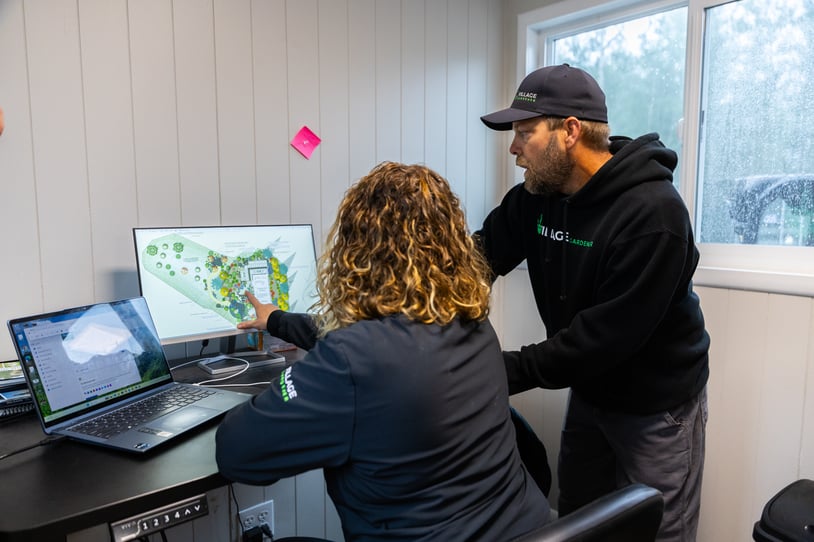
Image Source: Village Gardener
So, as the Marketing Manager, I took that responsibility from them. I had a rough call outline/questions that identified:
-
Scope (size of patio, its usage, other desired features - so I could give them a ballpark starting point)
- Timeline (how long they could wait)
- Competitors (if we were the only ones quoting this)
- Decision-makers (who should be involved)
- Positioning (if this was a project we even wanted)
Before investing significant sales time, you should understand the basics.
That isn't about making prospects jump through hoops. It's about respecting their time and yours.
Qualification looks very different depending on what you sell.
A lawn care or pest control company might determine within minutes whether a homeowner is in the service area, has the right property, and wants a program you offer.

Image Source: Green Valley Lawn Care
Sending a landscape designer across town is different. So is sending an arborist to inspect trees or having a commercial business developer spend hours walking a large property.
Please...spare your salespeople the wasted time and build a thorough qualification process!
RELATED READING: A 5-Point Checklist for More Effectively Qualifying Prospects (BANT+P)
4. What Actually Happens During the Sales Conversation?
This is where company owners and executives can have a major blind spot.
You see the sales report. But when was the last time you listened to your team handling actual leads or watched them conduct consultations?

Image Source: Barrett Tree Service
I've listened to phone calls and watched salespeople on properties that made me cringe. I've also worked hard myself to grow my skills in green industry sales conversations.
Common problems aren't complicated:
- Talking instead of listening
- Jumping to a solution before understanding the problem
- Asking superficial questions
- Failing to uncover what actually matters to the customer
- Not understanding with whom you're competing against
- Avoiding difficult conversations
- Failing to establish a clear next step
- Never actually asking for the sale
And this isn't necessarily a “bad salesperson” problem.
Who is coaching them?
Even good salespeople need someone listening to calls, reviewing lost opportunities, riding along occasionally, role-playing difficult situations, and helping them improve.
Managing someone by their monthly sales number tells you the result. It doesn't necessarily tell you what opportunities were squandered.
5. How Long Does It Take to Put a Solution in Front of Them?
I'll throw myself under the bus on this one.
I was a decent salesperson. But there were times when my workload became so intense that I didn't get proposals out as quickly as I wanted.
I knew what I should be doing. I also had another five properties to visit, three estimates to prepare, another customer who needed something left that day... and tomorrow's appointments waiting for me.

Image Source: KD Landscape
That's why leaders need to ask:
Is the proposal taking as long as the work requires, or as long as the salesperson's workload dictates?
Those are very different things.
-
A lawn treatment program may be something you can price and sell on the phone.
-
A straightforward tree-pruning estimate may be presented on-site after an inspection.
-
A thoughtful landscape design takes weeks to create.
-
A proposal for a massive commercial property can require site measurements, estimating, subcontractor pricing, and internal review.
Complexity takes time. But are you wasting great leads because it takes too long to get proposals into your prospect's hands?
Which leads us to our next potential sales problem.
6. What Happens After the Proposal Goes Out?
“We sent the estimate.”
Okay. Then what?
This is one of the biggest missed opportunities I see.
Sometimes the answer is essentially...nothing.
No phone call. Maybe not even a follow-up email. The salesperson moves on to the next five estimates because that's what's screaming for attention today.
And I understand why. I've lived it. Oh the stories I could tell!

Image Source: Lawn & Pest Solutions
Some salespeople are less likely or comfortable picking up the phone. Others are simply overloaded. In either case, green industry companies need a process that doesn't rely exclusively on one busy salesperson remembering to chase every open opportunity.
That might include:
- Scheduled personal follow-up
- Automated reminders and emails
- A sales assistant helping manage open opportunities
- Clear next steps established when the proposal is presented
- Case studies, testimonials, photos, and videos relevant to the project
- Helpful content addressing common questions or objections
Technology can help. Additional staffing can help. Neither replaces the human conversation when one is needed.
Your own CRM should also make neglected opportunities painfully obvious. An open $100,000 proposal with no activity for three weeks shouldn't be hiding in someone's outbox.
RELATED READING: Assignment Selling: 3 Ways to Leverage Your Marketing Assets Throughout Your Sales Process Landscape Leadership
7. Is Your Backlog Costing You Good Sales?
Backlog is not a dirty word.
Healthy companies need work lined up. And depending on the service and season, customers should reasonably expect to wait.
But I've also been the salesperson staring at a fantastic opportunity knowing, I could sell this, only to tell the prospect we're 18 weeks out.
And they're gone.
That crushes the soul of a salesperson because sometimes there's very little they can do about it. It also causes a substantial rift between sales and operations.

Image Source: Level Green Landscaping
Good salespeople should uncover timing early. They should be transparent about your backlog, determine whether the customer's timeline is flexible, and confidently explain why your company may be worth waiting for.
But great selling can't overcome an unreasonable wait for every customer.
If you're routinely losing ideal opportunities because customers can't wait for you, leadership needs to know that. And the answer isn't necessarily “generate more leads.”
At the same time, turning marketing off every time the backlog gets heavy can create the opposite problem. Today's packed schedule can become tomorrow's empty pipeline.
The objective isn't zero backlog. It's understanding how much demand you can absorb and how often capacity is costing you otherwise-winnable business.
Stop Managing Only What Sold
Here's the bigger problem I see with many sales organizations.
They manage by the sales report.
How many estimates went out? How much did we sell? What's our close rate? How does that compare to goal?
Those numbers matter.
But they don't tell you about the good lead that waited two days for a response. Or the designer who drove an hour to an appointment that never should have happened. Or the proposal that sat unfinished for ten days. Or the $75,000 opportunity nobody called after sending the estimate.
Image Source: Outback Landscape
I've written before about tracking sales activities, pipeline velocity, and lost opportunities because closed revenue alone doesn't tell leadership the whole story.
RELATED READING: Lost Opportunities - 3 Things Every Sales Manager Should Be Measuring
So don't finish this article by creating seven new initiatives for your sales team.
Start with the misses.
-
Pull 10 to 20 recently lost opportunities that you genuinely wish you had won. Then reconstruct what happened.
-
When did the lead arrive?
-
When did someone respond?
-
Was it properly qualified?
-
What happened during the consultation?
-
How long did the proposal take?
-
What happened after it was delivered?
-
Was timing or backlog an issue? And, most importantly, why did you actually lose?
Look for the pattern. You may discover you don't need to fix seven things. You need to fix one really important thing first.
And even when you get really good at turning leads into sales, there's another Growth Gap waiting on the other side.
In Part 2 of this series, we'll look at why winning more new business doesn't necessarily mean your company is growing.
If you love insights like these, consider joining over 5,000 of your green industry peers and subscribe to our blog.
Or, if you're ready to work with a marketing agency that actually gets the pain points of your green industry sales process, and has solutions to improve it, schedule a consultation with us.