

This is how the majority of landscape companies think about business development...It's a collection of activities.
They attend a trade show in March. Sponsor a golf outing in May. Send a few emails throughout the summer. Maybe a salesperson drops off cookies at a property management or custom homebuilder office.
Individually, none of those things is bad. In fact, many successful landscape companies do all of them.
The problem is that prospects don't experience your company in isolated moments. They experience your company as a series of connected interactions, and every one of those interactions shapes how they perceive your business.
A property manager or builder might first encounter your company through a LinkedIn post. Later, they may visit your website after receiving a recommendation from a peer. Months later, they receive a thoughtful mailer from your sales team. Eventually, they watch a customer testimonial video before agreeing to a meeting.
From your perspective, those are separate marketing and sales activities. From their perspective, it's one experience.
That was one of the biggest takeaways from a recent conversation I had with Mark Stern from Custom Box Agency.
At first glance, you might assume Mark's company creates custom promotional products, direct mail campaigns, or branded gifts. While physical touchpoints are certainly part of what they do, that's not really the business they're in.
Mark's team helps companies design customer experiences.
Not just the experience after someone becomes a customer, but the experience of becoming one.
It's a subtle distinction, but an important one. Most companies spend their time thinking about tactics. The companies that consistently win attention and trust spend their time thinking about the journey.
Stop Focusing on Activities. The Best Companies Design Journeys.
One of the themes that came up repeatedly during our conversation was intentionality.
Many landscape companies approach business development by asking tactical questions.
-
What should we sponsor?
-
What should we hand out at the show?
-
What should our salespeople leave behind after a meeting?
-
What should we send to prospects?
Those questions aren't necessarily wrong, but they skip over a much more important one:
-
What experience are we trying to create?
The answer to that question changes everything. When landscaping companies focus exclusively on activities, they tend to create disconnected experiences.
The trade show exists separately from the website. The follow-up email exists separately from the direct mail piece. The customer testimonial video exists separately from the sales conversation.
The prospect, however, doesn't separate those experiences.
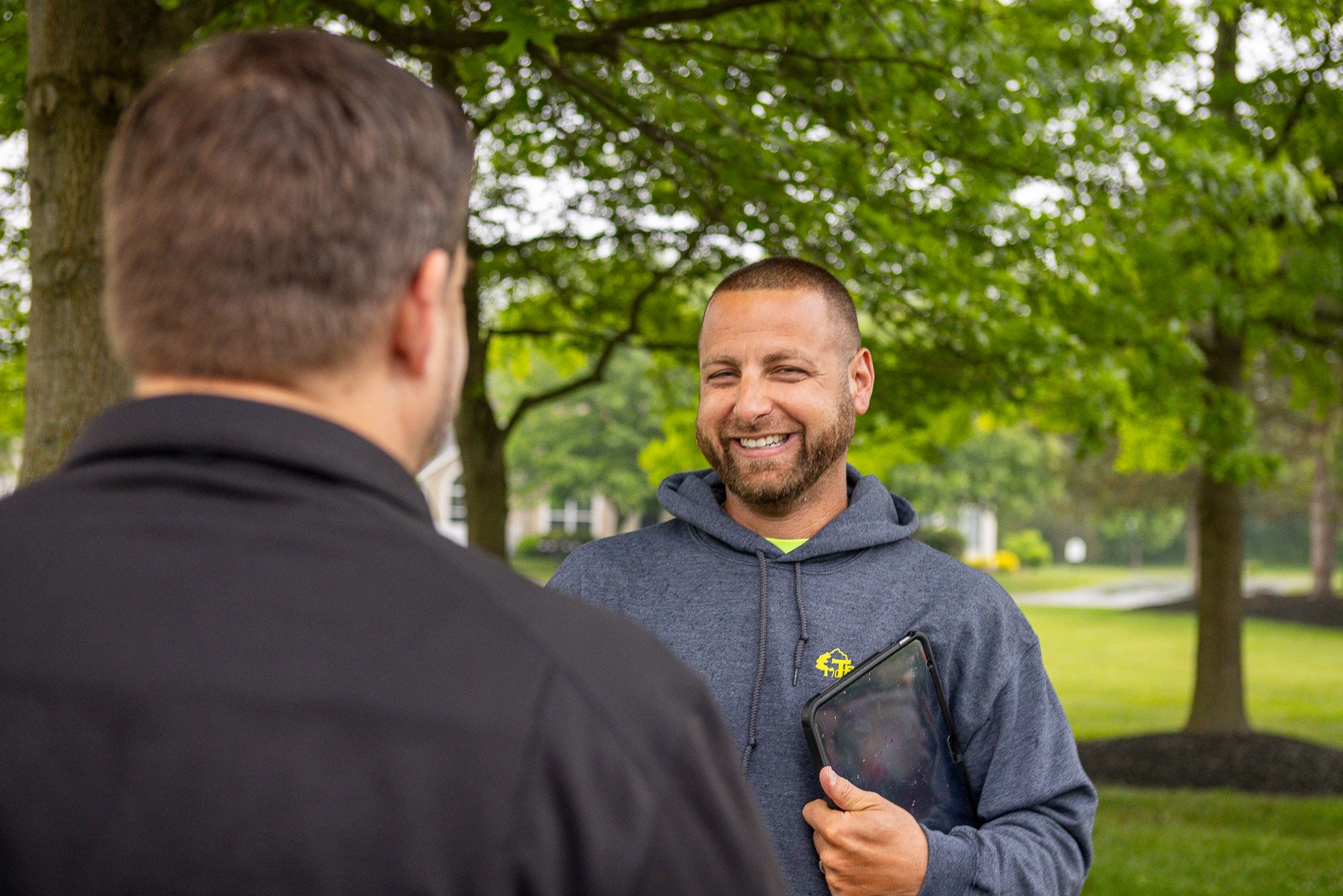
Image Source: Trimline Landscape Management
They're forming an opinion about your company every step of the way. They're deciding whether you understand their challenges. They're evaluating whether you seem professional, trustworthy, and capable. They're comparing your approach to every other company trying to earn their attention.
The best business development strategies aren't simply a collection of touchpoints. They're a coordinated effort to build trust over time.
Why Generic Outreach Is Losing Its Impact
This is where Mark's phrase, "SWAG is dead," comes into play.
He's not suggesting that promotional products, gifts, or direct mail no longer work. His point is that too many companies rely on them without a clear purpose. As he joked during our conversation, S.W.A.G. often becomes "Stuff Without A Goal."
That's a problem because prospects aren't looking for more stuff.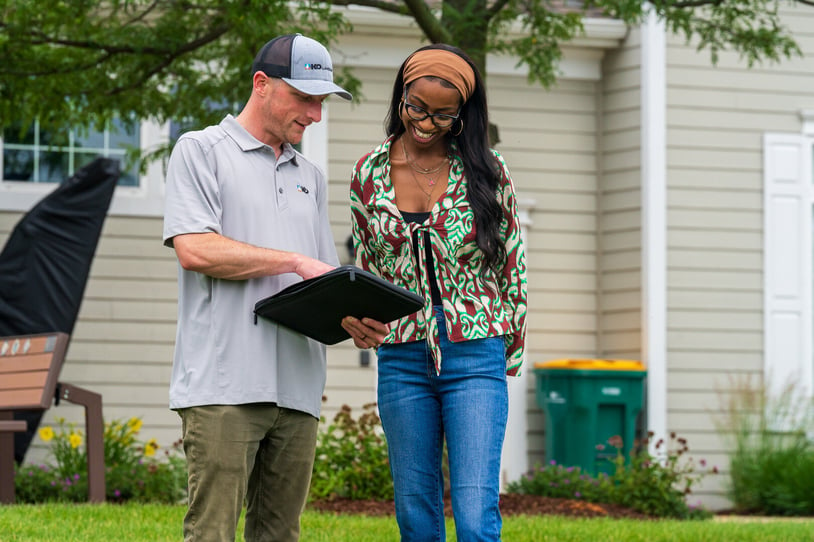
Image Source: KD Landscape, Inc.
Property managers don't need another tumbler sitting on their desk. Custom home builders aren't waiting for another branded notebook. Affluent homeowners aren't making purchasing decisions based on who gave them the nicest giveaway item.
What they're looking for is confidence.
-
They want confidence that you'll follow through on commitments.
-
Confidence that you understand the pressures they face.
-
Confidence that you've solved similar challenges before and can help them achieve the outcomes they're looking for.
Most outreach focuses on promoting the company. The most effective outreach focuses on helping the prospect.
That's a very different approach.
During our conversation, Mark shared an example from a staffing company that created a tool called "57 Hats." Instead of creating a brochure explaining their services, they developed an exercise that helped business owners identify all the different roles they were performing within their organizations.
As owners worked through the exercise, they naturally became more aware of staffing bottlenecks and operational challenges. The company wasn't leading with a sales pitch. They were helping prospects better understand a problem they already had.
The tool created value before a sales conversation ever occurred.
That's what made it effective.
What This Means for Landscape Companies
The lesson isn't that every landscape company should create a custom box or develop a physical tool... Although, I do think it's an opportunity to stand out.
The lesson is that the best business development helps prospects think differently.
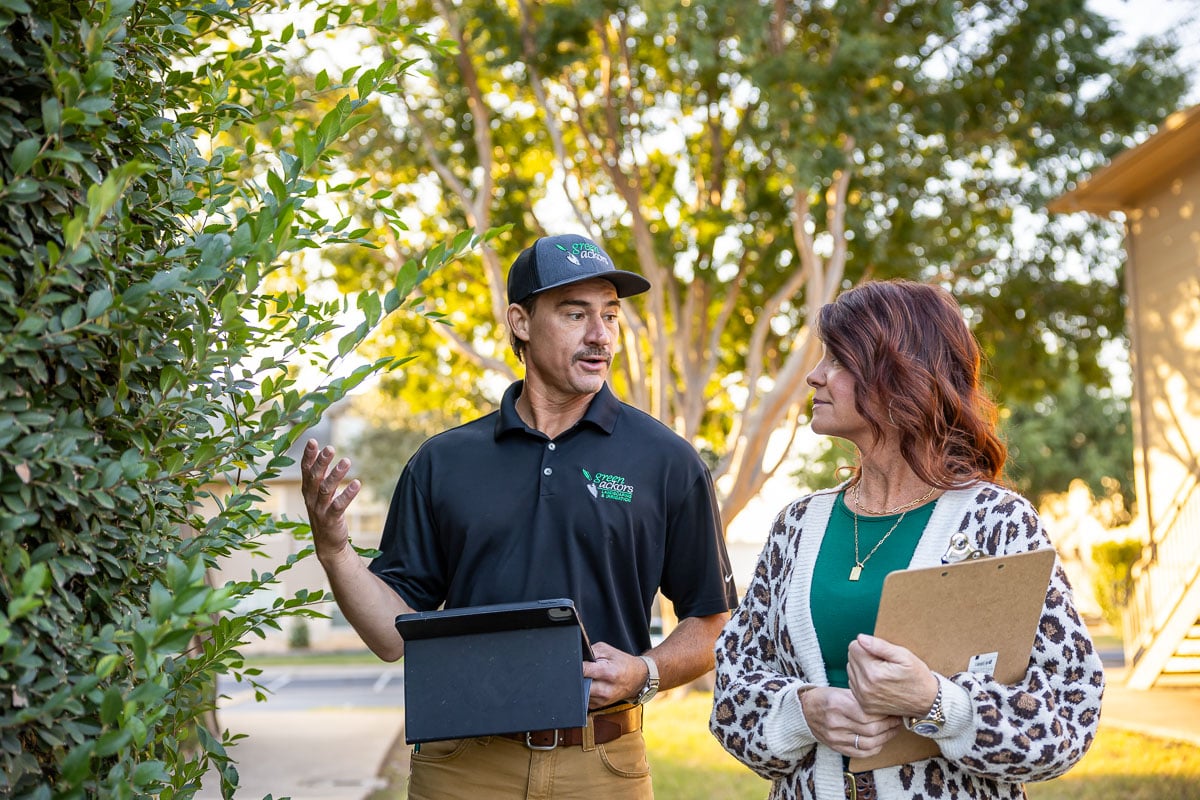
Image Source: Green Ackors Irrigation & Landscaping
Consider a property manager. Most landscape companies approach them with a list of services. They talk about maintenance programs, enhancements, irrigation, snow removal, and response times.
Those capabilities matter, but they aren't necessarily the things occupying a property manager's mind.
-
They're thinking about resident complaints.
-
They're worried about budgets.
-
They're managing vendor relationships.
-
They're dealing with communication challenges and trying to avoid situations that create more work for them.
The same principle applies to custom home builders. Builders aren't searching for another subcontractor relationship to manage. They're trying to deliver exceptional projects, maintain schedules, and create positive experiences for homeowners.
Affluent homeowners aren't evaluating landscape companies based solely on technical capabilities. They're looking for trust, professionalism, responsiveness, and confidence that their property will be cared for properly.
When you understand those realities, your business development strategy begins to change.
Instead of asking how to get someone's attention, you start asking how to demonstrate that you understand them.
That's a much more powerful place to start.
Digital Marketing and Physical Assets Are Better Together
One of the things I appreciated most about Mark's perspective is that he doesn't view physical and digital experiences as competing strategies.
In fact, the most effective business development efforts combine both.
A thoughtfully designed physical touchpoint might create curiosity.
-
A QR code leads to a case study.
-
A case study leads to a customer testimonial video.
-
A video leads to a conversation.
-
A follow-up email reinforces the same message.
Every interaction builds on the previous one.
The physical experience creates engagement. The digital experience provides depth. Together, they create consistency.
This is where many landscape companies leave opportunities on the table. They think about direct mail, digital marketing, content creation, social media, and sales outreach as separate functions. The prospect doesn't experience them that way. They experience them as one brand.
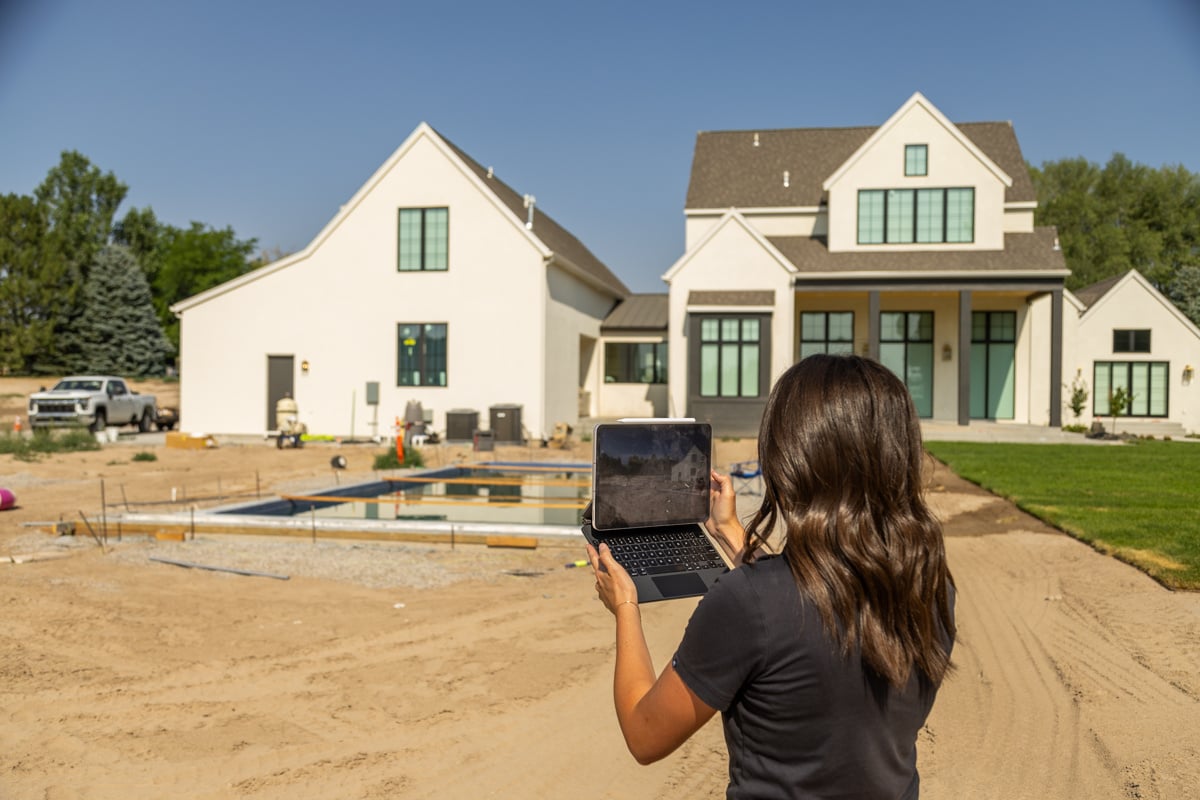
Image Source: Outback Landscape
When every touchpoint reinforces the same message and demonstrates the same understanding of the customer's challenges, trust begins to form long before a proposal is ever requested.
That's the real opportunity.
The Future Belongs to Landscape Companies That Design Better Experiences
The landscaping industry doesn't suffer from a shortage of capable companies. Most markets are filled with contractors who can maintain properties, install landscapes, manage irrigation systems, and deliver quality work.
The challenge isn't proving you can do the work. The challenge is giving prospects a reason to remember you before they need you.
That's why I think Mark's message resonates so strongly.
The future of landscaping business development isn't about finding a more creative giveaway item or spending more money on sponsorships. It's about intentionally designing the experience prospects have with your brand.
-
Every interaction matters.
-
Your website matters.
-
Your content matters.
-
Your follow-up process matters.
-
Your customer stories matter.
-
Your sales conversations matter.
-
And yes, even the physical touchpoints matter. Not because they're promotional products, but because they're part of a larger experience.
The landscape companies that will continue winning the best relationships won't be the ones creating the most activity. They'll be the ones creating the most intentional experiences. They'll understand their customers deeply, connect physical and digital touchpoints thoughtfully, and consistently demonstrate that they understand the challenges their prospects face.
Because in the end, prospects rarely remember every email, every brochure, or every event sponsorship. They remember how your company made them feel.
And the companies that make prospects feel understood are the ones that earn the opportunity to become trusted partners.
Do you love thought-provoking ideas and conversations like this? Join over 5,000 of your green industry peers and subscribe to our blog. And if you're ready to attract the ideal clients through a comprehensive marketing strategy, reach out to us to request a consultation.