


Green industry marketing conversations start with "The Plan".
There’s a clear outline of what’s going to happen over the first six to twelve months of your new engagement with a marketing agency. Campaigns are mapped out, budgets are allocated, and expectations are set.
On paper, it all makes sense.
But once that plan moves into execution, things become complicated.
Some service divisions don’t grow as quickly as you hoped. Priorities shift inside your business. Opportunities come up that weren’t part of the original scope. Over time, the gap widens between what was planned and what actually happens.
When that gulf appears, your marketing agency account manager should be ready to step in.
.png?width=1256&height=773&name=Landscape%20Leadership%20team%20-%20Kyle%20Larson%20account%20manager%20Chris%20and%20Chad%20(1).png)
Marketing agency account managers are responsible for adapting your plans to changing conditions, keeping an engagement aligned with your business’s needs, and ensuring day-to-day decisions move things in the right direction.
This is the third and final article in our series based on a recent episode of the Landscape Leadership® Podcast.
-
In the first article, we looked at how practical green industry experience shapes marketing.
-
In the second, we focused on communication and relationship management.
Here, we’ll look more closely at how strategy is actually carried out and what separates a plan that looks good from one that produces consistent results.
If you haven’t already done so, be sure to check out the full podcast episode that inspired all three of these articles below
Green Industry Marketing Strategy Is Never Static
Imagine breaking ground on a six-figure landscape installation, only to watch months of careful planning be interrupted by underground hazards you didn’t see until excavation began.
Marketing plans can be similarly disrupted, as changes in consumer behavior, new technologies, and other business realities force you to change a marketing plan you thought was set in stone.
Just like you wouldn’t plant grass during a late freeze, your account manager shouldn’t stick to a marketing plan that no longer accommodates your business’s needs.
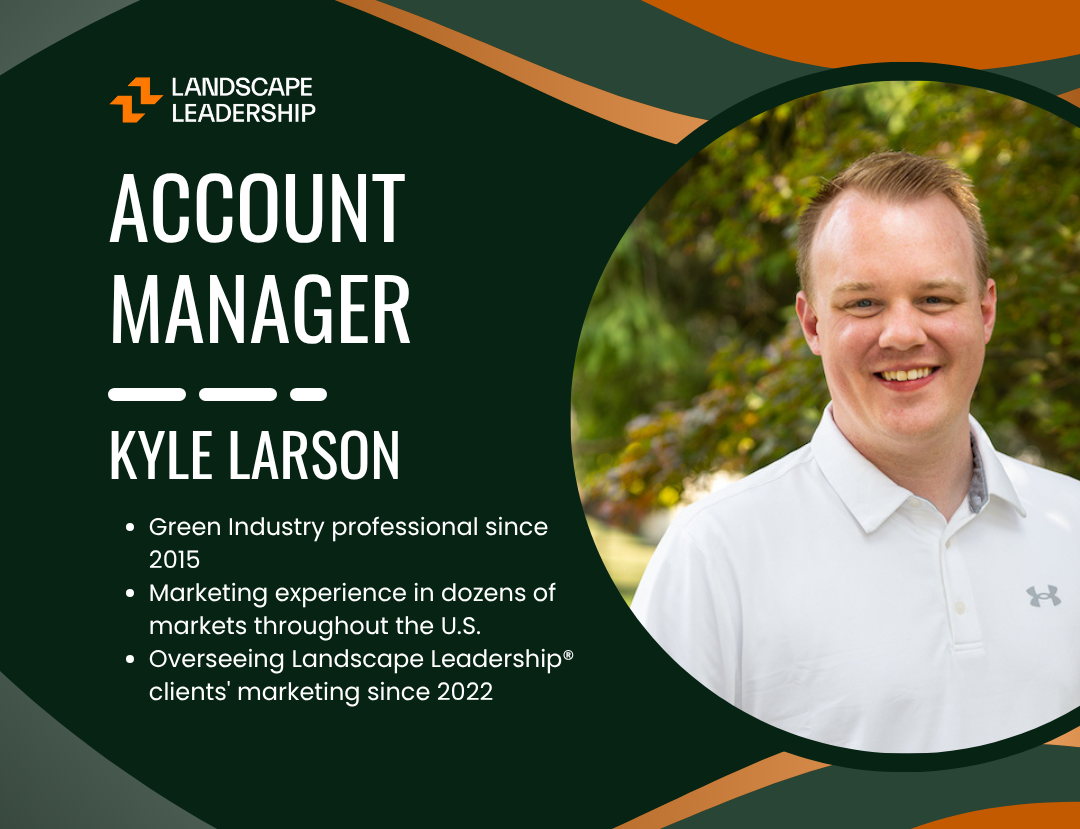
Account manager Kyle Larson described this in a straightforward way when talking about campaign planning:
“We always put a plan together… and without fail, it usually gets adjusted at some point during the season.”
That adjustment process is where a lot of the real work happens. It’s less about rewriting strategy and more about paying attention to what is actually happening in the business and making sure marketing reflects it.
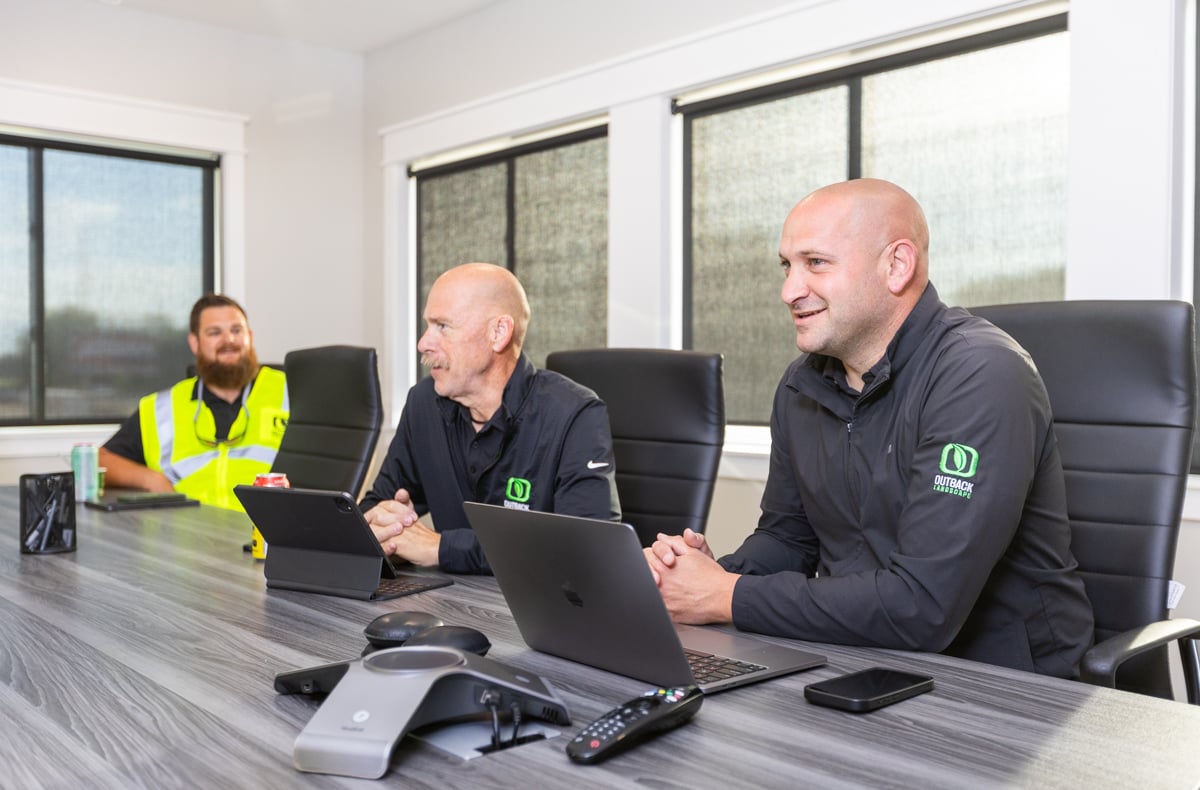
Image Source: Outback Landscape
Without that connection, it’s easy for marketing to drift into its own track. Campaigns keep running, but they’re no longer tied closely to what the company needs most at that moment.
A good marketing agency account manager helps prevent that by staying close to the details, communicating often, and ensuring the plan continues to fit your business’s ever-changing needs.
Good Strategy Requires Tradeoffs
One of the less visible parts of managing marketing is deciding what not to do.
There is always more that could be done...more services to promote, more campaigns to run, more ideas to test. But time, budget, and attention are limited.
In the podcast episode, I provided more insight into how priorities shift within a green-industry business. A company might decide to focus more heavily on one service division or a geographic area for a year or two.

Image Source: Trimline Landscape Management
That kind of focus requires discipline. It also requires alignment between you and your marketing agency account manager.
Without that alignment, marketing can become scattered. Effort gets spread too thin. Campaigns don’t run long enough to see results, making them harder to measure or improve.
This is where marketing becomes less about creative ideas and more about strategic choices.
Execution Is Where Most Green Industry Marketing Strategies Break Down
A strategy can look solid on paper and still fail in practice. Often, the issue is not the idea itself. It is how consistently and thoughtfully it is executed. This shows up in small ways:
-
Campaigns that are planned but not fully implemented
-
Messaging that is inconsistent across channels
-
Follow-through slows down once the initial work is done
Marketing agency account managers play a central role in preventing that kind of drift. They are the ones connecting different pieces of the marketing effort and making sure things continue moving forward.
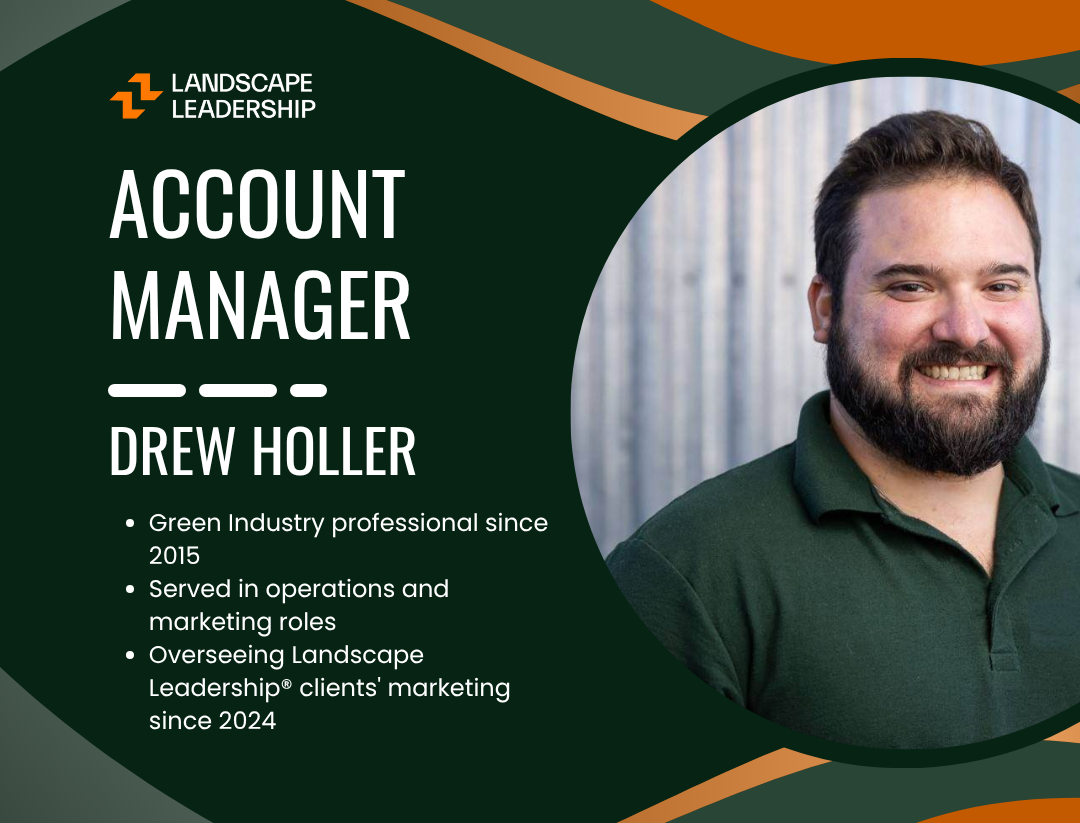
Drew Holler, one of our account managers with a background in landscaping operations, talked about how different marketing channels need to work together rather than operate independently.
“A lot of green industry contractors have had this experience: we work with this guy for printing our shirts and our hats, we work with that mail house for printing our mailer and shipping it off. Clients are used to a lot of different vendors for a lot of different things. So when you get someone that can do it all, including your website management, reporting on leads, etc., it's a much more holistic look at everything.”
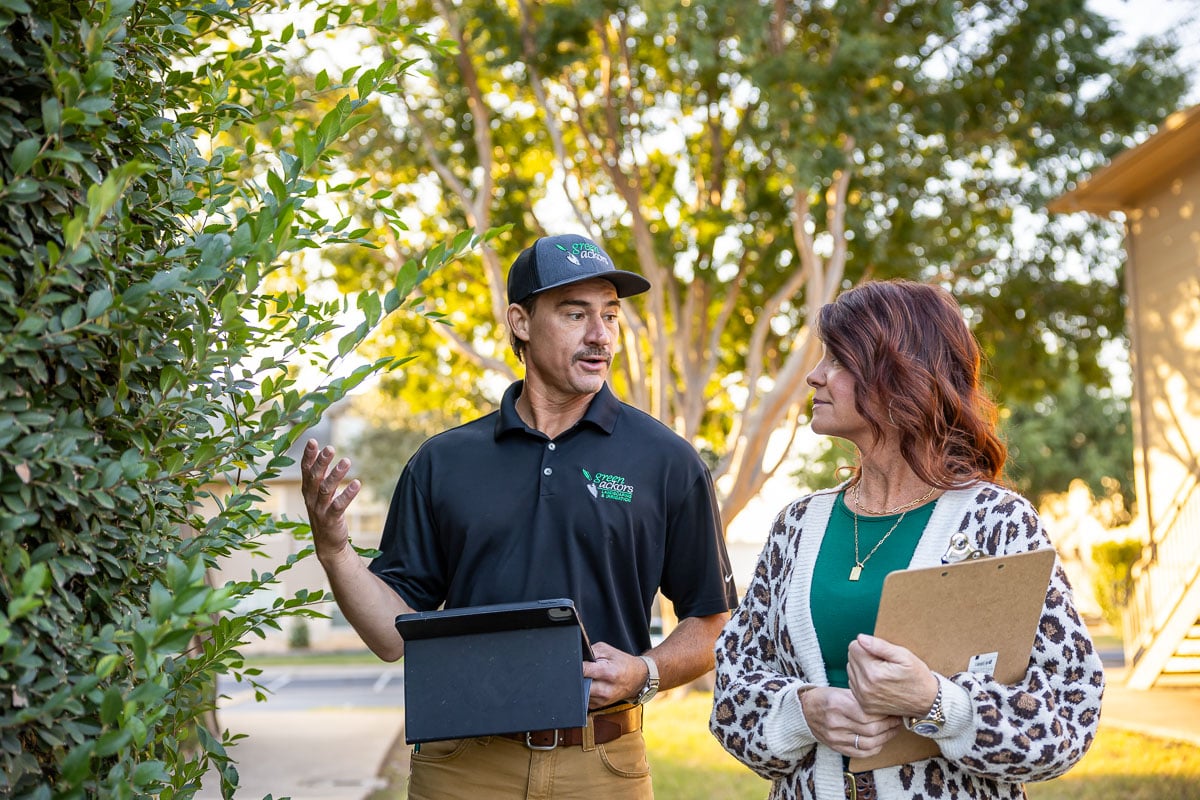
Image Source: Green Ackors Landscaping & Irrigation
That kind of coordination is easy to overlook, but it has a direct impact on results. When efforts are aligned, they reinforce each other. When they are disconnected, they compete for attention.
Adjusting Midstream Is Part of the Job
Even with strong execution, there are times when part of the marketing strategy simply does not work as expected.
A service might not be generating the level of interest you anticipated, a campaign might underperform, or a shift in your business might require a different focus.
In those moments, the ability to adjust matters more than the original plan.
Kyle Larson explained that these changes are common:
“Some services might not be performing as well, and we will shift communication to feature a different service.”
He also mentioned situations where larger changes occur, such as opening or closing a branch or moving away from a particular client sector (like abandoning residential or commercial entirely).
Each of those requires a shift in messaging and allocation of effort.
The key point is that marketing is not locked in once it begins. It should be responsive to what is actually happening.

Image Source: Tropical Gardens Landscape
One of the more subtle risks in marketing is forcing a business to fit a predefined marketing strategy. This can happen when agencies rely too heavily on canned programs for all clients.
In practice, your green industry marketing strategy should be shaped by your business, not the other way around.
That means your marketing should reflect the following:
-
Your staffing capacity
-
Your growth goals
-
Your service mix
-
The realities of your market
I described how this plays out over time when working with clients:
“We keep notes, and then when we plan for the next year, it shapes the next engagement based on the client’s specific needs.”
That ongoing adjustment is what allows a strategy to stay relevant rather than becoming a poor fit for the realities of your crews, your clients, and your business goals.
Staying Open to Change Matters
Real-time software that tracks your crews’ hours and locations. Electrified equipment that can replace an entire fleet of tools powered by gas. The constant churn of available labor means that no two years seem the same.
Your business changes fast. Marketing tools change just as quickly.
Another point that came up toward the end of the conversation is how quickly things evolve, especially in digital marketing.
New tools, new platforms, and new behaviors can shift what works and what does not.
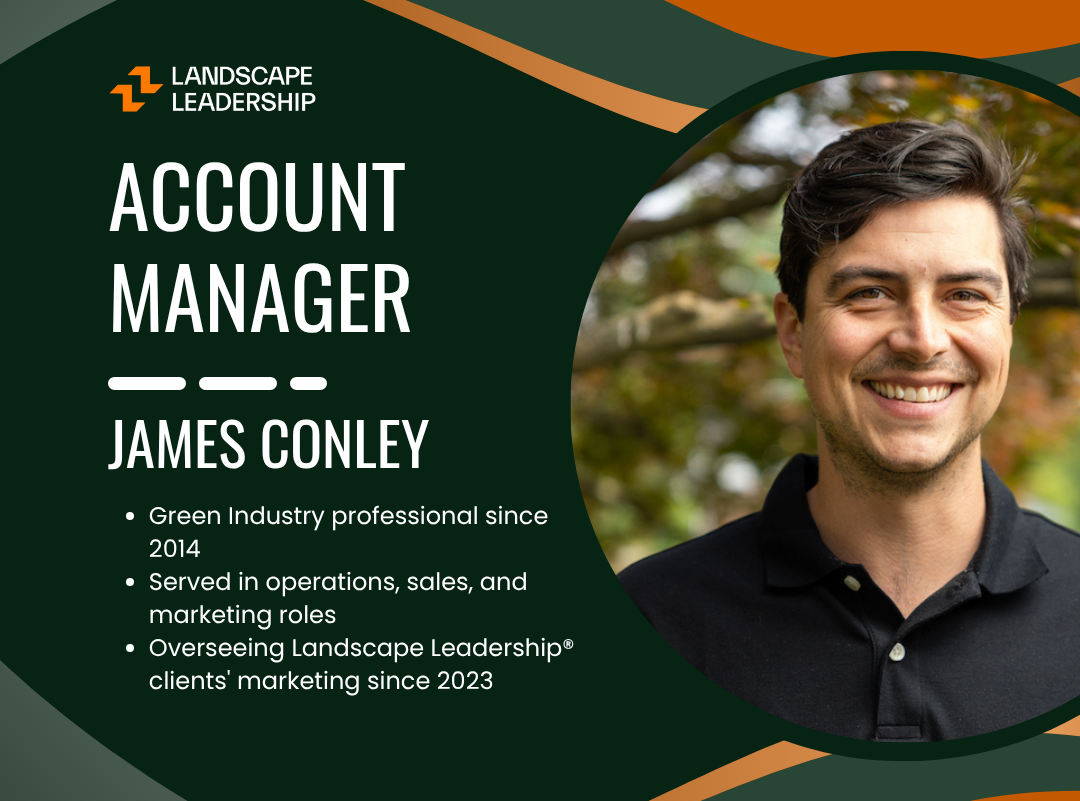
James Conley, an account manager with both field and sales experience, summed it up simply:
“Some of the things we do now… may not have even existed a couple of years ago. It changes fast.”
That pace of change can be frustrating, especially when something that worked well in the past starts to lose effectiveness.
But it is also part of the marketing environment. Staying open to adjusting your approach is often necessary to keep improving.
Connecting Your Marketing to the Field
If there’s a common thread across all three parts of this conversation, it’s that results don’t come from any single piece of the relationship.
It’s not just about having someone with practical green industry experience. It’s not just about good communication. And it’s not just about having a solid strategy.
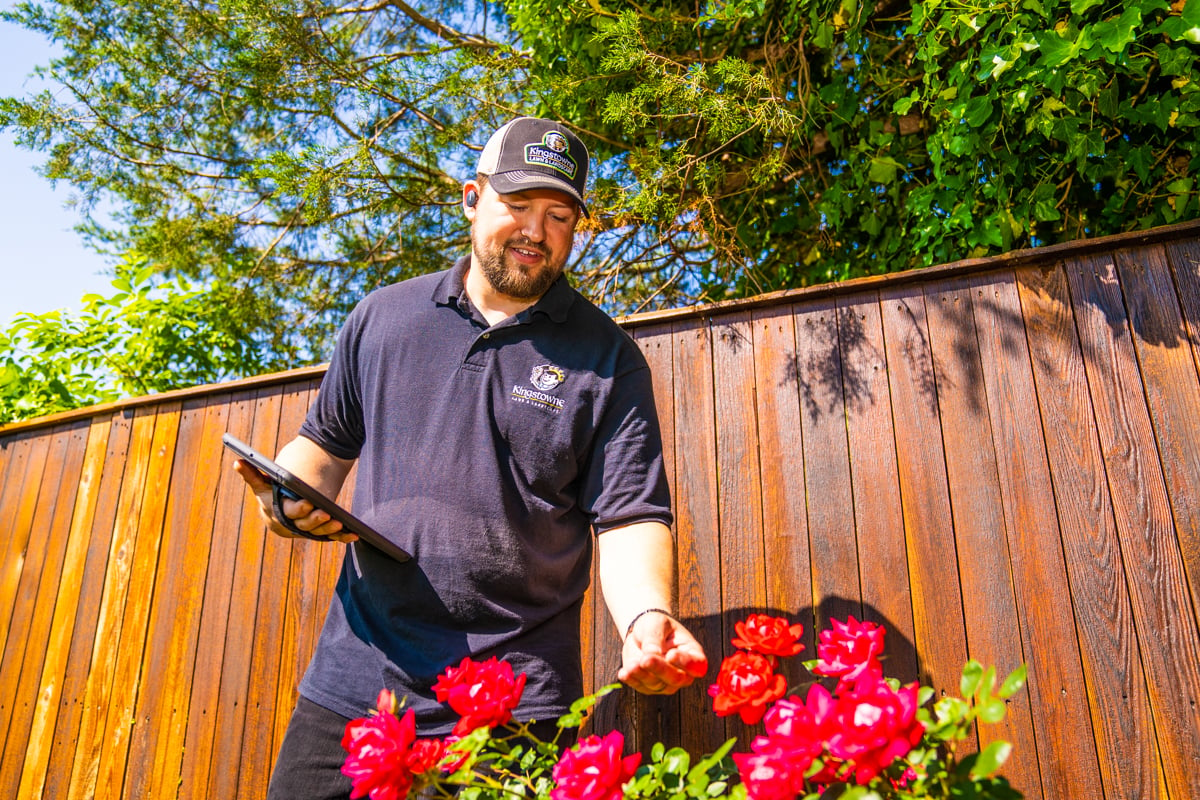
Image Source: Kingstowne Lawn & Landscape
What tends to matter more is how those pieces work together over time, and how they serve your business.
An account manager might understand the green industry well, but if they can’t translate that into clear direction or follow through on execution, that experience doesn’t go very far.
On the other hand, someone might communicate well and stay organized, but without the context to make informed decisions, the work can start to feel disconnected from your actual business.
Strategy sits in the middle of that. It gives direction, but it only holds up if it’s supported by the right conversations and informed by what’s happening in the field.

Image Source: Mid-South Outdoor Lighting & Audio
When those elements are aligned, marketing tends to feel steady. Decisions make sense. Adjustments are easier to make. Progress is easier to track.
When they’re not aligned, things can start to feel fragmented. You may still be doing a lot of activity, but it’s harder to see how it connects or where it’s leading.
That difference is usually not obvious at the beginning of an engagement. It shows up over time, in the consistency of the work and in how well the marketing adapts as your business changes.
Work With a Marketing Agency That Stays Aligned with Change
If you’ve worked with a marketing agency before, you’ve probably seen how quickly things can drift when priorities shift, and the strategy doesn’t keep up.
.png?width=1576&height=930&name=landscaping%20marketing%20agency%20(1).png)
The difference usually isn’t the original plan. It’s whether the person managing your account is paying attention, making adjustments, and keeping your marketing aligned with what your business actually needs.
That’s where results are gained or lost over time.
Was this helpful? We share insights like this regularly with green industry professionals who want a clearer understanding of how marketing holds up in the real world, not just in a proposal. You can join over 5,000 others who subscribe to our blog for practical ideas and observations from the field.
And if you’d like to talk through your own situation, you’re always welcome to request a consultation. We’re happy to take a look and offer a perspective on where things are working and where they may be falling out of alignment.