
When Your Logo No Longer Fits Your Green Industry Business
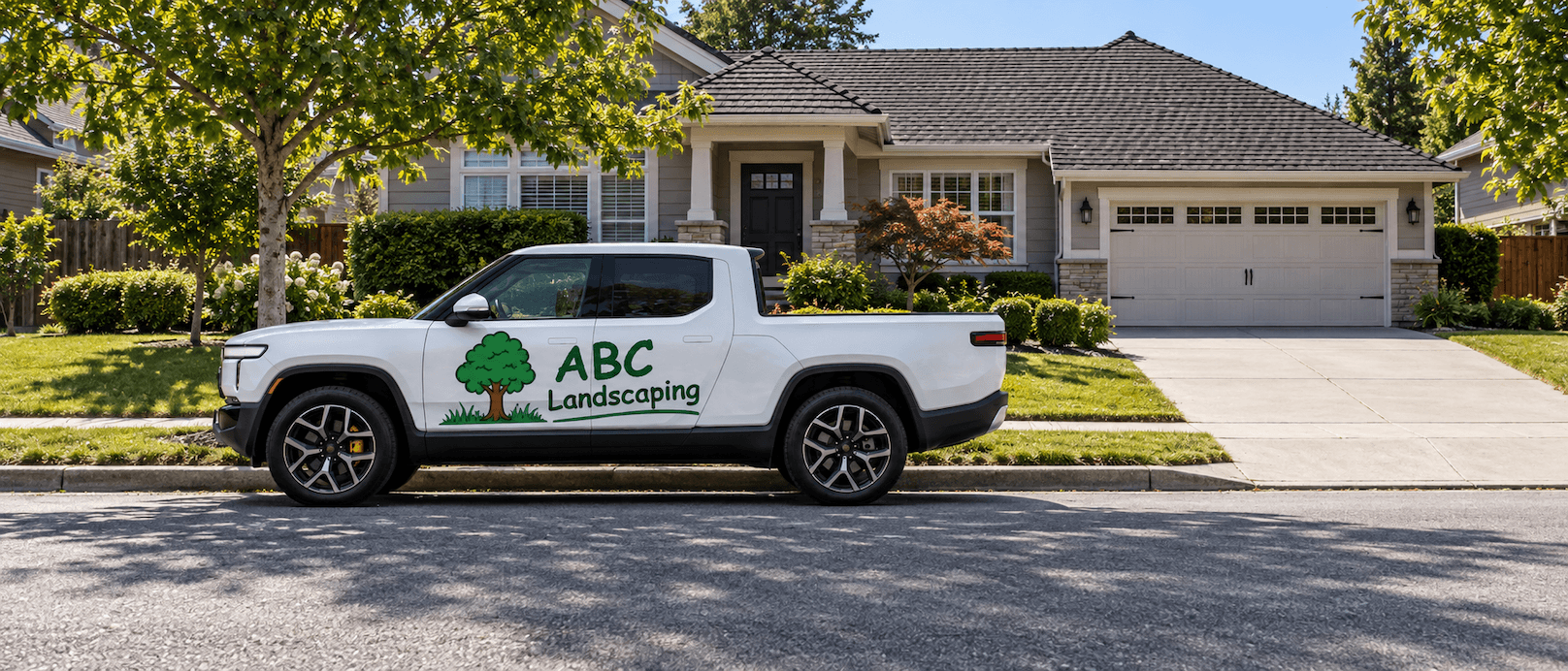
There are a lot of impressive companies in the green industry hiding behind some pretty unimpressive logos.
Maybe yours was created 15 or 20 years ago when your company was a fraction of its current size. Since then, you’ve hired better people, bought better equipment, taken on bigger projects, pursued better customers, and invested a lot of money into your marketing.
But the logo, colors, and fonts? Those haven’t changed much.
And changing them feels like a massive undertaking. Your identity is already plastered across trucks, uniforms, signs, proposals, your website, and who knows what else.
So it’s easier to keep using what you’ve always used.
That’s exactly why rebranding takes courage.
In this episode of the Landscape Leadership® Podcast, I sat down with Ben Richardson to talk about how green industry companies can recognize when they’ve outgrown their visual identity, what actually goes into creating a better brand, and why you don’t necessarily need to change everything overnight.
Your Company May Have Outgrown Its Brand
Ben has worked with brands inside and outside the green industry, including Google, Volvo, NASCAR, Loving, and Yardnique. One thing he sees frequently in landscaping is a company that has evolved dramatically while its visual identity has stayed frozen in time.
That disconnect becomes increasingly important as a company grows.
When you’re small, much of your reputation can travel through word of mouth. Customers know the owner. Employees know the customers. Your reputation is personal.
But a company with 100, 200, or 300 employees can’t rely on those personal connections in the same way.
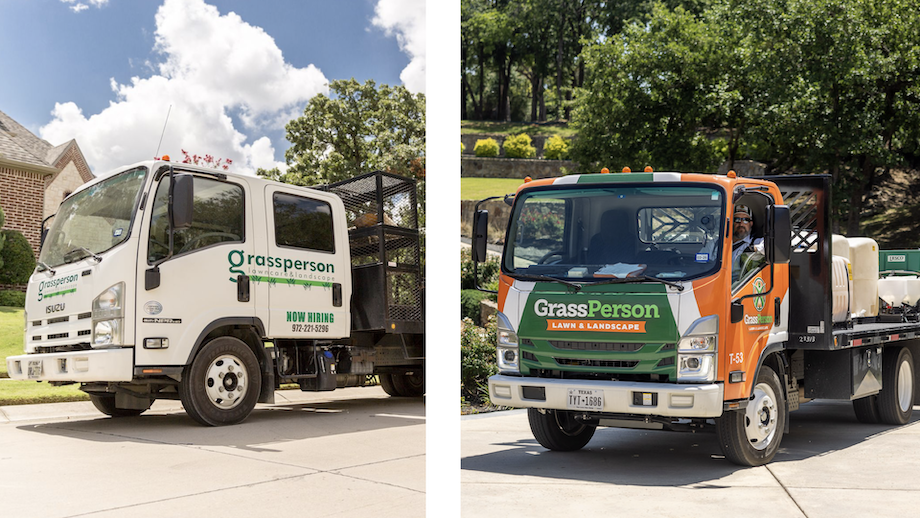
This is a great example of how Grassperson Lawn & Landscape rebranded. The color, new icons, and new fonts helps them to stand out and turn this established brand into its more modern image.
Your brand starts doing more of that work for you.
As Ben explained during our conversation, branding becomes a way of communicating the identity of a larger organization to people who may never meet the founder or hear its story firsthand.
That raises an uncomfortable question:
Does your visual identity represent the company you are today, or the company you were 20 years ago?
An Old Logo Isn’t Automatically a Bad Logo
This doesn’t mean every company needs to redesign its logo because it reached some arbitrary expiration date.
Some visual identities are timeless. The problem isn’t age. It’s whether the brand still works.
-
Does your visual brand reflect the sophistication of your company?
-
Does it appeal to the customers you’re trying to attract?
-
Does it look appropriate beside the quality of work you produce
-
Would your employees actually want to wear it?
-
And does it help you stand apart from every other green industry company in your market?
That last question matters.
Ben pointed out one obvious challenge in our industry: green is everywhere. Trees are everywhere. Leaves are everywhere. Certain fonts and visual styles become so common that they stop creating any meaningful differentiation.
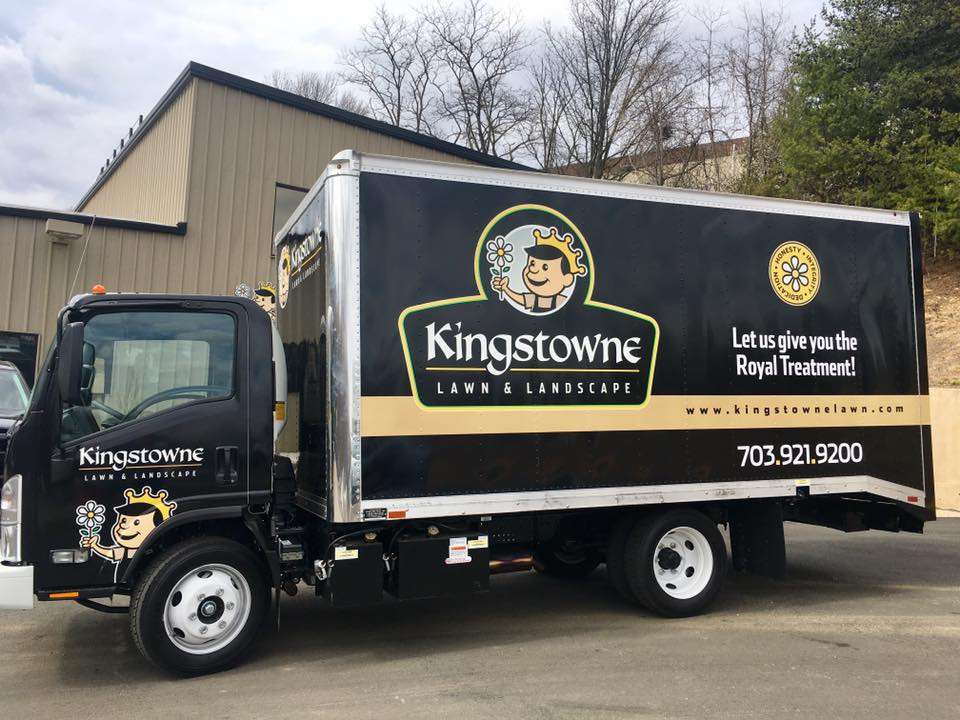
The Kingstowne Lawn & Landscape branding is an excellent example of how choosing different colors can help you stand out.
I’ve said for years that sometimes the tree and grass in a landscaping logo become a crutch. You shouldn’t have to cram everything you do into your logo for people to understand your company.
Your logo doesn’t have to explain the entire business. Your marketing should do that.
A Great Rebrand Starts Before the Designer Opens Software
One of the biggest mistakes a company can make is deciding it needs a new logo and immediately telling a graphic designer to start drawing.
Design should come later. First, you need to understand the business.
-
Who are you?
-
Who are you trying to become?
-
Who are you trying to attract?
-
What does your company actually feel like?
-
What should someone assume about you before they ever speak with a salesperson?
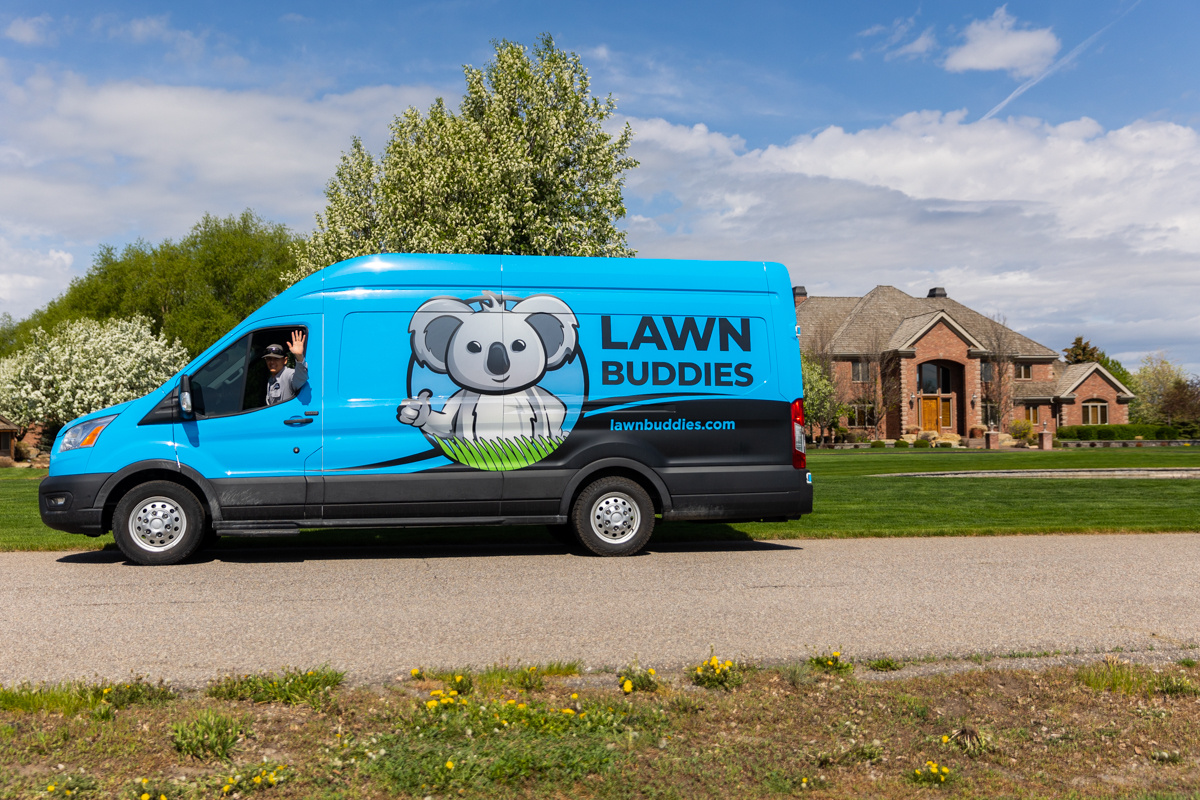
Lawn Buddies vans stand out in any neighborhood and convey a friendly, approachable team of local pros.
Ben emphasized that a visual identity has to connect to the real personality and goals of the business. Creating a brand around something you wish you were, but that your customers and employees don’t actually experience, eventually falls flat.
Brand Design Case Study: Salt & Soil Garden Co.
Our work with Salt & Soil Garden Co. is a good example.
They were launching a residential-focused fine gardening company in Florida. We knew we wanted something sophisticated, recognizable, and distinctly different from the typical green landscaping brand.
We eventually landed on a flamingo icon. But even that wasn’t arbitrary.
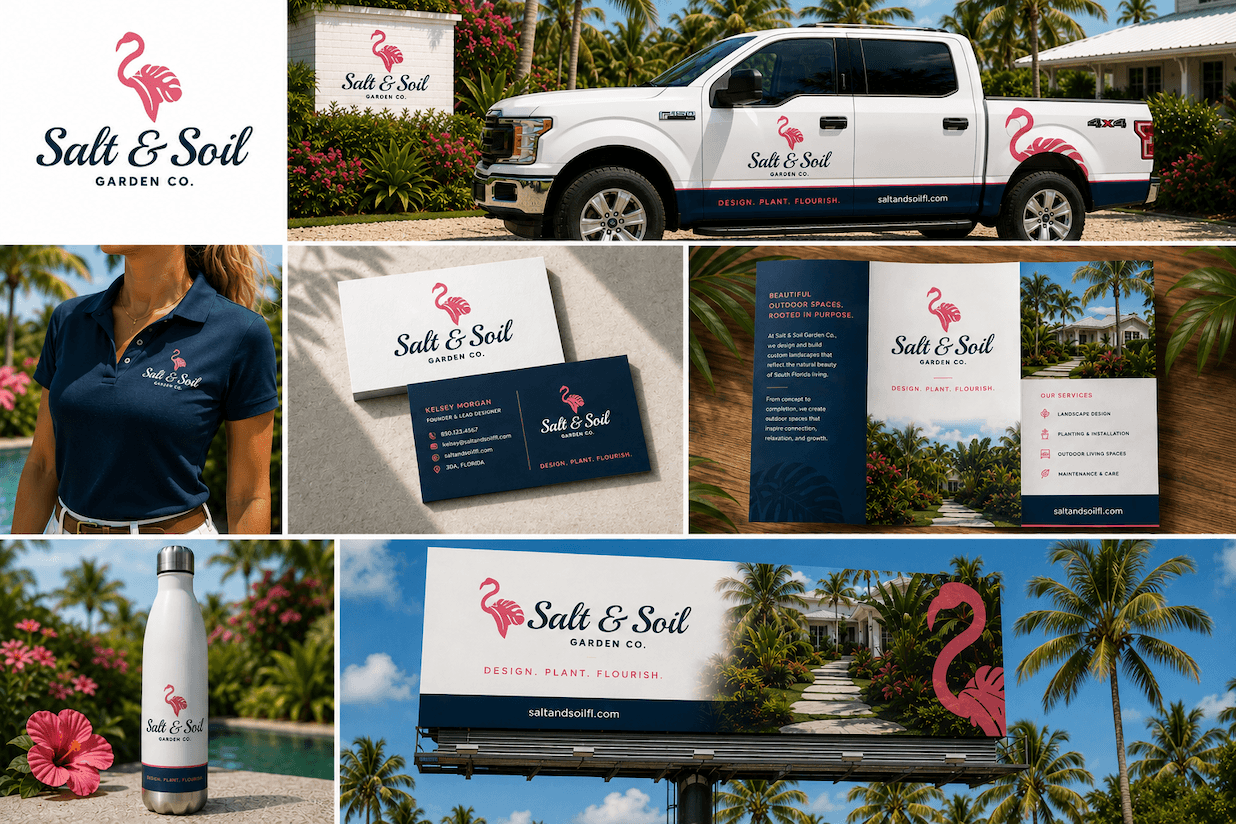
The flamingo connected the company to Florida without screaming “landscaping.” Its wing subtly incorporated the shape of a leaf. We paired that with a pink color palette that felt unexpected for the industry and supported the personality of the company.
The goal wasn’t simply to create something pretty.
We wanted the visual identity to start telling the company’s story before anyone read a word of copy.
You Don’t Have to Change Everything Tomorrow
This may be the most important takeaway from our conversation.
A lot of established companies avoid rebranding because they immediately start doing the math.
How much will it cost to rewrap 100 trucks? What about the building signs? Uniforms? Printed materials? Trade show displays?
That thinking can stop a rebrand before it starts.
But it creates a false choice between changing everything immediately and doing nothing at all.
You can build the new identity first and phase in the execution.
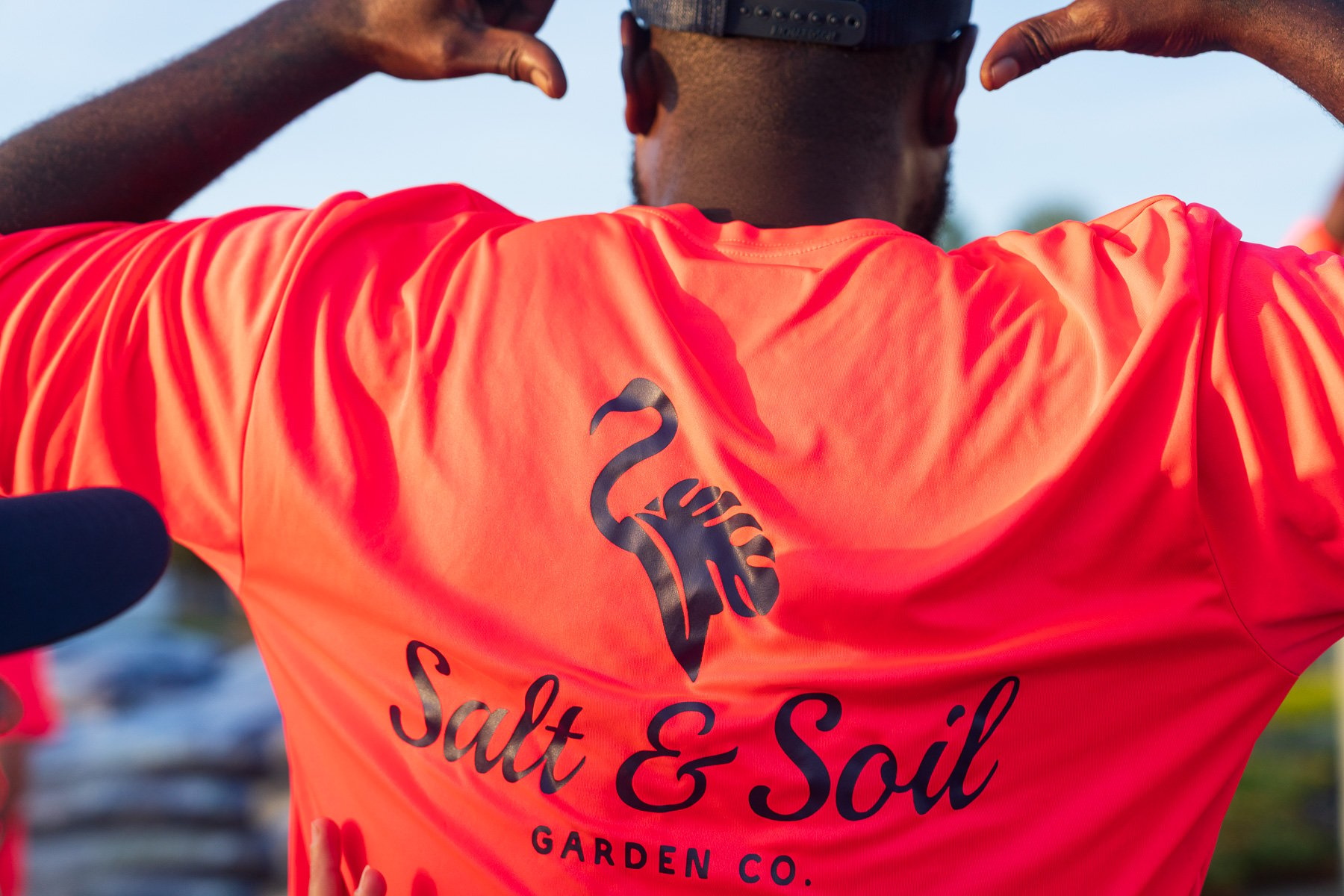
Start with your logo, typography, color palette, and other core brand elements.
Then go digital.
Update your website. Social profiles. Email signatures. Digital proposals. Recruiting materials. Ads.
As new printed materials are created, use the new brand. When vehicles are replaced or rewrapped, transition those too.
For a period of time, an old truck and a newly branded truck might be driving around the same market. That’s okay.
Ben made the point that customers probably give brands considerably more grace during these transitions than business owners assume. The important thing is that you continue moving forward rather than starting the process and leaving half of the company stuck in the old identity forever.
Take an Honest Look at What People See
If you’re wondering whether it’s time to rebrand, start with an honest evaluation.
-
Look at the caliber of work you’re doing.
-
Look at the customers you want.
-
Look at the people you’re trying to recruit.
-
Look at the company you’re trying to build over the next five or ten years.
-
Then pull up your website.
-
Walk outside and look at your trucks.
-
Look at your uniforms, logo, colors, and fonts.
Do those two versions of your company belong together? If they don’t, you don’t need to panic.
And you don’t need to replace everything tomorrow. But you probably do need a plan.
That may be the real courage required to rebrand.
It’s being willing to stop protecting something simply because it’s familiar and start creating a visual identity that fits the company you’ve become and the one you’re still becoming.
If you love conversations like these that encourage you to take bold steps with your marketing, consider joining 5,000+ of your green industry peers and subscribe to our blog.
And, if you're ready to embark on a courageous journey of transforming your entire marketing mix, reach out to request a consultation. We'd love to talk to you.